
American Surnames
A preposterous notion.

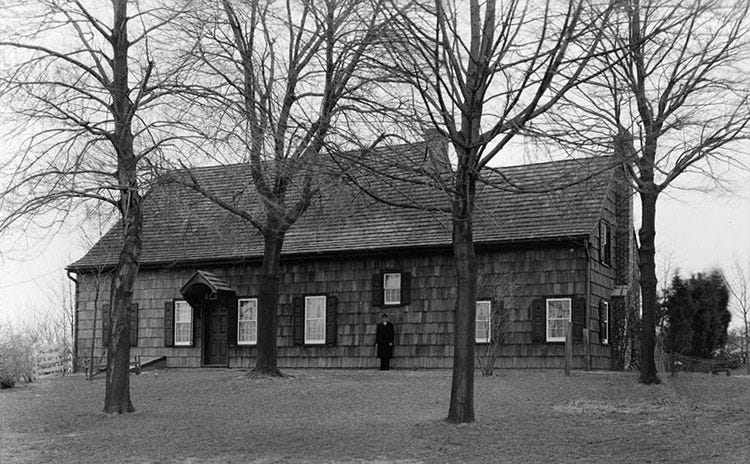
No such thing!, you say. There are surnames of indigenous origin of course. They deserve their own write-up. But “American” is not a language. And surnames take germ in a specific soil. English, that’s a soil. Mandarin, that’s a soil. American? Not a soil.
True enough. But there is nonetheless a class of surnames that we can with some justification call particularly American. These are names--usually, for reasons of chronology, descended from originally European names--that were actually altered or born anew on American soil. These are names that, if they exist anywhere else in the world, can be derived back to the United States or the Thirteen Colonies. To be clear, there may be an entirely different surname elsewhere in the world with the exact same spelling, but that is not disqualifying. See, for example, the Kashmiri name “Butt” and the English name “Butt.” They are spelled the same in English, but they have nothing to do with each other. They are two entirely separate homonymic surnames.
There are in any case a few ways in which these American names came to be. I will sneak preview for you that “changed at Ellis Island” is not one of them.
I’m going to cover some categories with examples for each. Send me some more!
Dutch to English
Dutch names are a great starting place. The Dutch were in America very early, most of them lived in an entirely Dutch-speaking milieu until 1664 (and many of them continued in a rural Dutch bubble, c.f. Rip Van Winkle), and after the Treaty of Utrecht they mostly stopped immigrating until well after the American Revolution. Add to that a classic English indifference to the proper pronunciation of a foreign language, and the fact that Dutch surnames themselves were hardly set in stone by the 17th century, with many regions still using patronymics only and many immigrants toggling between two or three different names as it suited them. It’s a perfectly fecund ground for the growth of new names.
Conover
Slightly altering a spelling to account for English orthography does not create a new, American surname. Dropping a foreign prefix (van, von, de, etc.)? Also not a new name. But butchering a surname into a new series of sounds to account for an Englishman’s inability to pronounce foreign phonemes? That’s an entirely new surname. The Conover family, and their cousins, the Cowenhovens, give us a handy example from both categories.
The immigrant was Wolfert Gerritse, a Dutchman from Amersfoort. Gerritse was his patronymic, indicating his father’s name was Gerrit. And though the records show Gerrit was indeed a tenant on the estate of Couwenhoven, suburban to Amersfoort, Wolfert himself did not appear with the toponym meaning “from Couwenhoven” until 1661, shortly before his death. His son Jacob, however, was using it as early as his marriage in 1637. In any case, the name stuck to Wolfert’s American descendants. But it only stuck for 150 years or so.
By the time of the American Revolution, when fewer and fewer of the old Dutch families were living in purely Dutch-speaking enclaves, the name had started to morph into something more palatable to the English tongue. Only four “Conovers” appear in the 1800 Federal Census, but returns from New Jersey have not survived, and the vast majority of Wolfert’s descendants lived in New Jersey. By the 1820 Census --still lacking New Jersey--Conovers had begun to spread west, appearing in both Ohio and Kentucky. By 1840, with New Jersey in the mix, there are 378 Conover heads of households, versus a paltry remnant of ten K- and Cowenhovens. All of the Kowenhovens were in Brooklyn, where Wolfert settled. Only two Conovers were in Brooklyn.
So maybe it’s overly generous to say the descendancy split.The Conovers swamped the Cowenhovens. American Cowenhovens still walk among us today, but they are a rare breed, the descendants of a proud core of stalwart Brooklynites.The Conovers, with all due respect, are everywhere.
Cowenhoven is a Dutch name. It’s lost its “van” and the spelling is a little off, but it’s clearly the same name. And indeed there are plenty of Dutch Kouwenhovens still. Conover on the other hand is mangled beyond recognition. If no records from colonial America had survived, we would be left with a strange but persistent tradition of Dutch origins. But could we have recreated the original surname from Conover? I doubt it.
Wyckoff
For our second Dutch to English, let’s use a very bad example. I’ll tell you why, and why it’s very bad, in a minute. This common American surname comes courtesy of Pieter Claesz, an immigrant from East Friesland who made of himself quite a prominent early Brooklyner. Friesland for the most part did not use surnames, and indeed would not regularly do so until Napoleon mandated their use two hundred years later. Thus, when Pieter came over to serve out an indentured servitude at Renssealaerwyck in 1637, he had only his patronymic: he was Pieter, son of Claes.
For many years, the popular etymology was this: Pieter merrily went by his patronymic as long as the Dutch were in charge, then was forced to choose a fixed surname by the English. By this point Pieter was no mere servant but a thriving landowner and magistrate. Befitting his elevated role in local government, he took the name Wyckoff, from “Wyk,” meaning “parish,” and “Hof,” meaning “court.” Thus a new American name was born. With seven children living to adulthood, the Wyckoffs spread rapidly in the former New Netherlands, leaving a trail of Wyckoff Roads, Farms, and Houses throughout New Jersey and New York.1
But as usual the popular etymology is wrong. Thanks to M. William Wyckoff and his 2015 treatise on the subject, we can be quite certain that Pieter instead came from a farm in Ostfriesland called “Wykhof,” and that the name was not Dutch but its close relative Frisian.2 And indeed, there are Wyckoffs in the region still, albeit spelled differently. I can’t count that as a new, “American” name. Instead, it’s a Frisian name with an English orthography. Even more devastating, German Wyckoffs immigrated to the U.S. in the 19th and 20th-centuries, meaning the Wyckoffs don’t pass the foundational test for an American surname, viz.: that every instance of the name living today is traceable to an American or colonial American ancestor.
It’s an interesting case, though. Given the late adoption of surnames in Friesland, it’s quite possible Pieter was the first person to adopt the name Wyckoff (or variants thereof). And it’s also quite possible that later adoptees of the name were basically unrelated--at least beyond the degree of kinship you’d expect in two random people coming from the same very small corner of the world.
German to English
Has your once-proud Teutonic surname been manhandled by a bunch of Scots-Irish backwoodsmen? Mostly depends when it got here. We might say there were two large waves of Germanic immigration. The first, from about 1690 through 1775, was almost entirely Protestant, mostly from the southwestern quadrant of the German “kleinstaaterei”, and largely driven by religious dissent and war-related tumult. The second, from 1848 through the early 20th century, boasted far more variation on all counts. German speakers of the first wave often got a name change. Germans of the second only rarely.
Apgar
The immigrant was Friedrich Epgert, a 32-year old farmer from the German Palatinate, a prime source for German immigrants in the first half of the 18th Century. Friedrich, or “Fritz,” arrived at the port of Philadelphia in 1740. It’s pretty obvious what happened to his name. And it only took one generation. By the time his son Frederick was buried in 1832, the name “Apgar” was well-established enough to be carved into his gravestone.
This kind of name change was quite common amongst German immigrants to the mid-Atlantic colonies. They come over with one name, pronounced in German and difficult for English scribes to pronounce, let alone spell. In a generation or two, the name becomes a friendlier simulacrum. There are many other examples even within Friedrich’s milieu (Germany-->Philadelphia-->Hunterdon County, New Jersey), such as Albach to Alpaugh, Beuchel to Pickle, and Rockenfeller to Rockafellow. The guttural “ach” sound was quite often softened to “augh.”
There have been many Apgars since, most famously Virginia Apgar, the developer of the “Apgar Test” for newborns. But they are all, as far as I know, descended from Fritz Epgert.
Goodnight
I don’t love the names that were directly translated into English. They’re a little boring. Often, because occupational surnames exist in many languages, they simply turn from a common German name into a common English one. E.g., Jaeger→ Hunter, Schmidt→ Smith. Sometimes there’s no English equivalent, and you do end up with a new name, e.g., Baumann→ Bowman, Schumacher→ Shoemaker. But these are all a bit boring. Much better is when a compound German surname is translated part by part into English, and you end up with a brand new, rather silly (no offense) name. Goodnight, which began its life as “Gutknecht,” is one of those.
“Gut” is easy enough. It means “good.” “Knecht” is a bit more complicated. In German then, as now, it meant a “servant” or “hired hand,” often what we might think of as a farm laborer. It is nevertheless a cognate of the English “knight,” and indeed both words started out meaning “servant.” “Knight” struck out on its own in the middle ages and took on a more exalted status. Nevertheless, there seems to have been a tradition of Knechts anglicizing their name to the cognate Knight rather than the literal translation Servant. Can’t really blame them.
The twist here is that the Gutknechts went with the slightly more intuitive “night,” even though it’s an entirely different word. Maybe they liked the happy phrase, or maybe their neighbors couldn’t be bothered to include the silent “k.”
French to English
Before 1850 or so, and even long after, not a “eau, “gn” or “ier” made it to American shores (or crossed the border) without suffering the most impudent effrontery. This is again most common for the earlier settlers, largely Huguenots settling in the mid-Atlantic colonies and surrounded by Dutch and English. Huguenot names in South Carolina often had a better time of it, probably because they were surrounded by linguistic compatriots. French Canadians of course had no such issues, at least until some began drifting over the border in the 1800s. Even so, their surname changes tended to merely affect orthography or pronunciation, since they couldn’t very well keep both. Thus descendants of the ancient Hébert family of Acadia became “Abare” in New York and New England, as the Acadian Boudreaus became “Boodrow.” Change the spelling, keep the pronunciation. In my own family tree, Guinaudeau became Ginnedo.
Similarly, before Americans grew sophisticated enough to pronounce a French “ier” at the end of a name, the form “yea” was a quite common approximation, as in Gonyea for Gagné, Tilyea for Tillier; and, though of a slightly different species, Duryea for d’Urie. A close variant came into use for the “on” ending, giving us Cortelyou for Cortillon, or the rare but delightful Runyou for Rugnion.
Anyway, to the weirder examples.
Rapelje/Rapalje
Rapelje is one of my favorite names for a couple reasons. First, because it looks so strange, not only to an Anglophone, but to almost anyone. Second, it has about as long a history in America as it’s possible to have: if you are lucky enough to have this rare bird of a surname, you can assume your patrilineal ancestor was in what became the United States before virtually any other European-descended family. Joris Jansen and Catarina Rapelje were married in Amsterdam in January 1624, then three days later embarked for New Amsterdam. Like the Wyckoffs, they were a very productive couple and their descendants have since spread the name across North America.
What makes Rapalje interesting is that the name was already altered in the Netherlands. As Joris’s marriage record shows he was from Valenciennes, the name was probably respelled from Rapareilliet or Raparlier, a common name in that city. Even at a Walloon (that is, French-speaking) church, the minister Hollandized it to Rapalje, and that’s the name Joris (or Georges, as he once was) took to the island of Manhattan.
What makes Rapalje really interesting is that it’s Dutch spelling of a French name survived the Treaty of Utrecht, survived the American Revolution, and continues, unsimplified, to this day. Sure, some families went with “Rapelyea” or “Rappleye,” but they would have done that early enough that the name was still pronounced Dutch-style, with the “j” making an English “y” sound. But most family members did not take that opportunity, and, inevitably, the hard “J” set in. Thus the town of Rapalje, Montana (“Rapell-gee”), named for a railroad executive.
English Spelling Degradation
This is actually a hard one. I thought I’d have more examples here, given English’s difficult and unintuitive spelling, regional variations on pronunciation, and low literacy rates in much of the United States. But all of these factors apply equally to the British Isles themselves. For example, the suffix -well is pronounced in British English as an unaccented syllable, without the “w” sound. A name like “Braswell” then, is pronounced something more like “Brazzle.” Lo and behold, the 1881 UK Census is full of Brazzles, Brazeals, and Brazils. Similarly, we’re all familiar with the decidedly unintuitive “right way” to pronounce the placenames “Worcester” and “Leicester,” among others. So we are not surprised to see the British Isles stocked with Woosters and Lesters. Even the fictional--but aristocratic--Bertie Wooster “misspells” his own name.
Or, for even less intuitive examples, look north to Scotland. Menzies? That’s pronounced “Mingus,” as in the great bassist Charles. MacLeod? McCloud. Forbes? Forbush, though good luck trying to use the original pronunciation in 2021. The point is that all of these were already confusing people 500 years ago, and alternate spellings to better track the spoken names were branching out at least by then, if not earlier. They are not American names.
“African” Surnames
This is a fascinating category of name. In each case, it’s a rare wonder that the name survived at all. In order to survive as a surname from pre-Revolutionary times to the present, an African name would need to belong to a free family of color. Any family adopting a name post-Revolution, and especially post-emancipation, would almost certainly take on an existing European surname. There is little to no evidence that descendants of slaves knew anything of their distant African ancestors at that point. The rare exception applies for those Africans who were only recently trafficked, as in the case of the famous Clotilda, the last slave ship to bring captives to the United States. But even the descendants of Clotilda’s captives mostly--if not exclusively--took English surnames, such as Lewis, Keeby, and Smith.
Cumbo
A rare and paradigmatic example. You could no doubt see your way to a Western European derivation for the colonial Virginian name Cumbo. Perhaps a Huguenot named Combeaux, or even one of the rare Italian immigrants to colonial Virginia. In the event, the name first appears in April 1667, as “Emanuel Cambow,” a man granted 50 acres in James City County, Virginia. The name was written “Cumbo” by the 1680s, when Emanuel’s granddaughter was baptized at St. Peter’s in New Kent county. Cumbo family researcher Andre Kearns makes the case that Emanuel was the son of two slaves, another Emanuel and a Joan. The surname, he also argues, appears to relate to the same-named village in modern-day Angola. That doesn’t mean that the Cumbos came from Cumbo of course, but merely that the two words may have common origins. And if so, it at least points to those origins being somewhere around Angola, at the time (and for long after) a Portuguese colony. Of note also is the name “Emanuel, quite rare among the English but incredibly common in Portugal (as “Manuel”), where King Manuel I had reigned not long before.
The fact that this name has survived all the way to the present-day, with descendants identifying as both black and white, is a fascinating testament to the tenacity of names themselves, which can survive time’s ravages virtually unaltered, even when all other memory is lost. Think of names as tiny time capsules, carrying information down the generations. Among other things, they give us a kernel of biography about the long-ago first person to carry the name. For instance, the last name Taylor carries with it the faint memory of the first man in the patrilineal line to assume it. We don’t know much about him, but we can say with some confidence that he spoke English, and he made clothing.
We may never know exactly what Cumbo means. But it tells us of a man born long ago, captured perhaps by enemies in battle, young and hardy enough to survive the middle passage, and possibly an English pirate raid on his first slave ship, but old enough to retain his original name and likely some deep knowledge of his birth culture. And ultimately, it tells us he was in America early enough that his ancestral origins did not ineluctably doom him or his progeny to enslavement. Interestingly enough, the surname today tells us virtually nothing about its living bearers. There is no real sense in which an American Cumbo, whether white or black, is Bantu, “Angolan,” Portuguese, or anything else not American. But it still speaks of the family’s American founder. In a sense that’s the mark of a successful surname in a globalized world. It has fully escaped its origins, speaks only of its founder and not of his descendants.3
Mozingo
Another example, Mozingo, is perhaps the only other one that can be satisfactorily traced to 17th-century America, where a first generation Virginia (and final generation West African) plausibly used it. There are other names of likely African origin--Quander comes to mind--but without the first generation in America we can only make a high confidence guess.
The journalist Joe Mozingo has done all the legwork on this family, and you can find some of his work here. I’ll spare you my redundant recap. That’s what the internet’s for, isn’t it?
Other Categories
What am I missing? In much of Catholic Europe and America, a personal or family nickname (or “dit name” as called in French Canada) may sometimes become a surname. Has that ever happened in the United States?
I wanted to say “townships,” but oddly enough Wyckoff, New Jersey is most likely from a Lenape word.
On that note, are there any counterexamples? Royalty comes to mind. The surname Windsor tells us a lot about its founder (he didn’t want to sound German) and a lot about its living bearers (they are close relatives of the UK’s reigning monarch). Cohen, Levi and their many variants are interesting examples. They tell us that the bearer (if male) is entitled to perform ceremonial religious duties. And they tell us that at some point, someone far back in the line thought (whether correctly or not) that they were descended in the paternal line from the priest Aaron and/or Aaron’s own ancestor Levi. They do not, breathless media reports notwithstanding, tell us the bearer is actually descended from those quasi-mythological men.
Just found a 10x grandfather Pieter Claessen Wyckoff — native German conscripted to Dutch diamond merchant Van Rensselaer — wyckoff is a name he made up — so all Wyckoffs and many of the various spellings in North America descend from him.
Oh my Genealogian friend this is fascinating, thank you for reposting… if that’s how it popped into my feed. It seems that both the names I was given by my dad and stepdad, endured American rewrites.
Ris is Switzerland in the mid-19th century became the German Ries when it crossed the American border. Faisan, a likely Huguenot name became Faison when it settled among the Winston’s and Johnson’s. Great work.